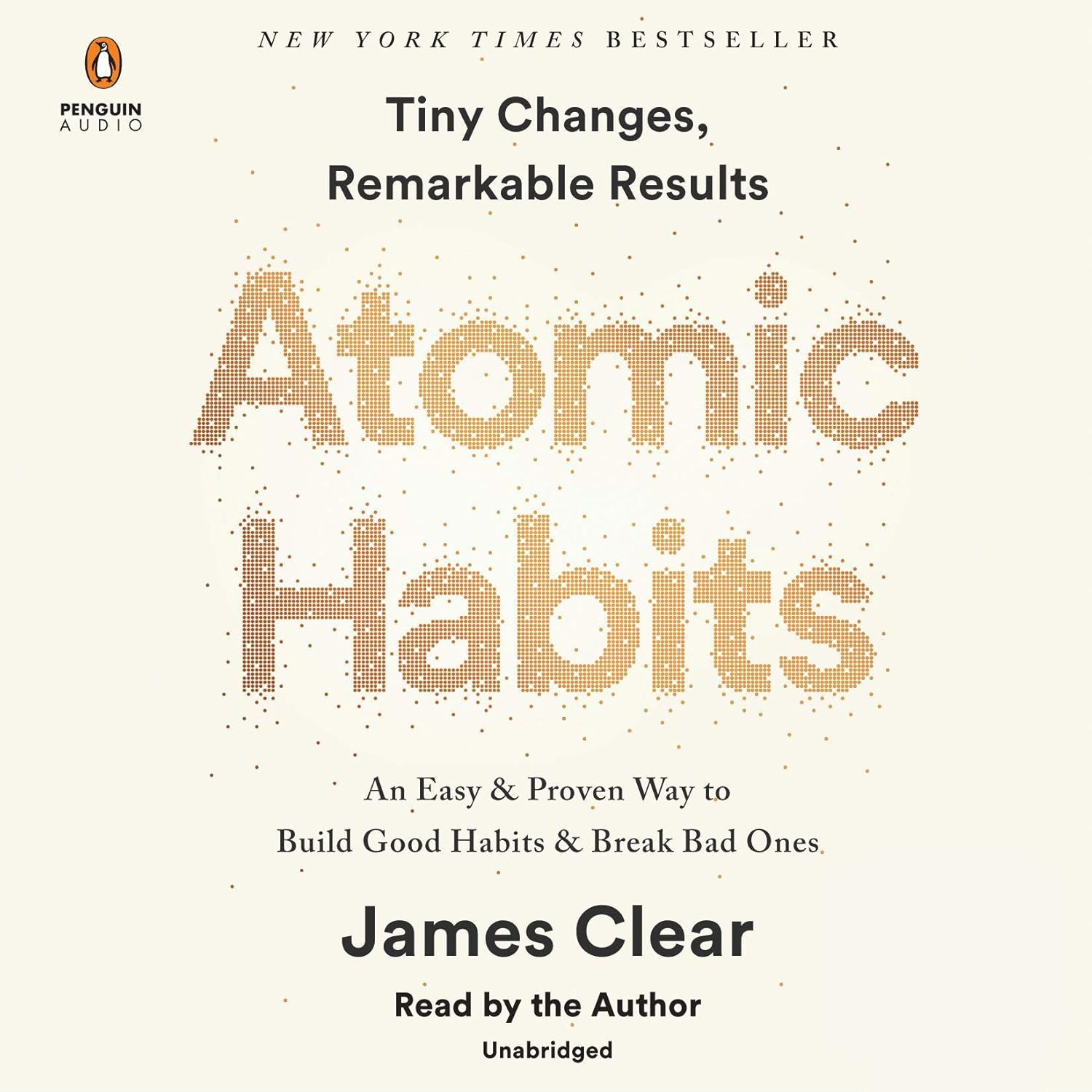
Atomic Habits: An Easy & Proven Way to Build Good Habits & Break Bad Ones is a practical self‑help book by James Clear about how small, consistent changes can lead to remarkable long‑term results in any area of life. It explains habits as a system, arguing that people do not fail because of weak willpower but because their environment and processes are not designed to support the behaviors they want.
Main idea
The core argument is that tiny, “atomic” habits—small actions repeated daily—compound over time like interest, turning almost invisible improvements into big outcomes. The book encourages focusing less on goals (like “lose 10 kg”) and more on building systems and identities (like “become a person who exercises and eats well every day”).
Habit loop and four steps
Clear describes habits as a loop of four elements: cue, craving, response, and reward. A cue triggers a craving, which leads to a response (the behavior) and then a reward that satisfies the craving and reinforces the habit. Understanding this loop makes it easier to analyze why a habit exists and how to change it.
Four Laws of Behavior Change
The book organizes its advice into four “laws” for building good habits:
-
Make it obvious: redesign your environment and cues so the desired behavior is easy to start and hard to ignore.
-
Make it attractive: link desired habits with things you enjoy and change how you think about them so they feel appealing.
-
Make it easy: reduce friction, simplify steps, and scale habits down so they are almost effortless to do every day.
-
Make it satisfying: add immediate satisfaction or a sense of progress so your brain wants to repeat the behavior.
These same ideas work in reverse for breaking bad habits: make them invisible, unattractive, difficult, and unsatisfying.
Identity and 1% improvement
A big theme is identity‑based change: instead of asking “What do I want to achieve?”, the book suggests asking “Who do I want to become?” and then using every small action as a “vote” for that identity. Over time, consistent actions reshape how a person sees themselves—like becoming “a reader” or “a healthy person” through repeated, aligned behaviors. The idea of getting just 1% better each day captures how modest improvements, if sustained, can create large differences over months and years.
View on Amazon
I
About the Author